
Florida Landlord Tenant Law: Selling With Tenants
Learn about Florida landlord tenant law sale rules. Discover your legal obligations when selling tenant-occupied properties and protect yourself.
How do leases affect the sale of a tenant-occupied property in Florida?
- — Fixed-term lease, mid-term sale: The buyer inherits the lease. The tenant stays, pays rent to the new owner, and the original lease terms remain in force until the end date.
- — Fixed-term lease with a sale clause: Some leases include a clause allowing termination upon sale with proper notice. Review your lease carefully before assuming this applies.
- — Month-to-month tenancy: You can serve a 30-day written termination notice. Timing this before or concurrent with listing gives buyers a cleaner path to possession.
- — Lease assignment: If the buyer wants to renegotiate terms with the tenant, both parties must agree in writing. You cannot unilaterally assign or modify a lease on behalf of a buyer.
Key Takeaways
- Fixed-term leases survive the
- Buyers inherit all lease terms; tenants cannot be removed
- 30-day notice for month-to-mon
- Florida Statutes §83.57(3) requires written notice at least
- 12-hour entry notice required
- Showings must be scheduled with 12 hours notice, between
- Three-party deposit addendum
- Seller, buyer, and tenant must all sign the security
What notice and entry rights do landlords have during the sale process?
- Deliver all entry notices in writing, either by hand delivery or certified mail.
- — Keep a log of every notice sent, including the date, method, and time of delivery.
- — Coordinate showing windows with the tenant when possible. Cooperation reduces friction and keeps the process moving.
- Avoid scheduling showings during tenant work hours without prior agreement.
- — Retain copies of all notices, communications, and documentation of tenant consent or objections to support your compliance record.
How should landlords handle security deposits when selling tenant-occupied property?
- Confirm the deposit amount. Pull the original lease and any receipts — The transfer amount must match the deposit held, including any interest if your lease requires it.
- Step 2 — Draft a written addendum. The addendum should identify the property, the tenant, the deposit amount, and the transfer date All three parties sign it at or before closing.
- Step 3 — Transfer the funds at closing. The deposit amount is typically credited from seller to buyer through the closing statement Do not pocket it and expect the buyer to collect separately.
- Step 4 — Notify the tenant in writing. Inform the tenant that the deposit has been transferred to the new owner, who is now responsible for its return.
What are the legal risks of removing tenants during or after a sale?
Florida law prohibits self-help evictions. Changing locks, removing doors, shutting off utilities, or removing the tenant's belongings to force them out are all illegal.
Florida law prohibits self-help evictions. Changing locks, removing doors, shutting off utilities, or removing the tenant's belongings to force them out are all illegal. These actions carry penalties of up to three months' rent, plus attorney's fees. Courts treat self-help evictions seriously, and a single incident can result in a judgment that exceeds the value of the deposit you were trying
What are the legal risks of removing tenants during or after a sale?
The sale of a property does not give you the right to remove a tenant who has a valid lease. Florida law is direct on this point, and the penalties for getting it wrong are significant.
The sale of a property does not give you the right to remove a tenant who has a valid lease. Florida law is direct on this point, and the penalties for getting it wrong are significant.
Legal eviction requires proper cause and proper procedure. The Florida Residential Landlord and Tenant Act sets strict statutory timelines for every step of the Florida eviction process, from the initial notice to the court filing. A sale does not create cause for eviction on its own. You need a legitimate legal basis, such as nonpayment of rent or a lease violation, to begin the process.
Non-compliance with landlord-tenant statutes during property sales carries real risk. Tenants can challenge eviction notices, file deposit claims, and pursue harassment allegations. Each of those actions can delay your closing or expose you to damages.
The safest path is to honor the lease, communicate clearly, and let the term run its course. If you need the property vacant before closing, negotiate with the tenant. A cash-for-keys agreement, where you offer the tenant money to vacate voluntarily, is legal and often faster than any eviction process. Document the agreement in writing and have both parties sign it.

Key takeaways
Florida landlord-tenant law requires you to honor existing leases, follow strict notice rules, and transfer security deposits properly when selling a tenant-occupied property.
Florida landlord-tenant law requires you to honor existing leases, follow strict notice rules, and transfer security deposits properly when selling a tenant-occupied property.

What I have learned from watching landlords sell occupied properties in Florida
— Eric
What I have learned from watching landlords sell occupied properties in Florida
Most landlords who run into legal trouble during a sale do not set out to break the law. They just underestimate how much the tenant's rights travel with the property.
Most landlords who run into legal trouble during a sale do not set out to break the law. They just underestimate how much the tenant's rights travel with the property. I have seen sellers assume that a signed purchase agreement gives them authority to start clearing out tenants. It does not. The lease is a contract that binds the new owner just as firmly as it bound the original one.
The landlords who close smoothly are the ones who treat the tenant as a stakeholder in the transaction, not an obstacle. That means giving early notice of the sale, explaining what will change and what will not, and keeping communication in writing. Clear and proactive communication with tenants during a sale improves cooperation and reduces costly delays or legal challenges. That is not just good advice. It is what the data from real disputes consistently shows.
If you are selling a property with a long-term tenant, consider whether a cash-for-keys negotiation makes more sense than waiting out the lease. A cooperative tenant who vacates early can save you months of carrying costs and showing complications. But that conversation only works when the tenant trusts you. You build that trust by following the law from day one. For landlords weighing their options, understanding Florida seller situations with real examples can clarify which path fits your circumstances.
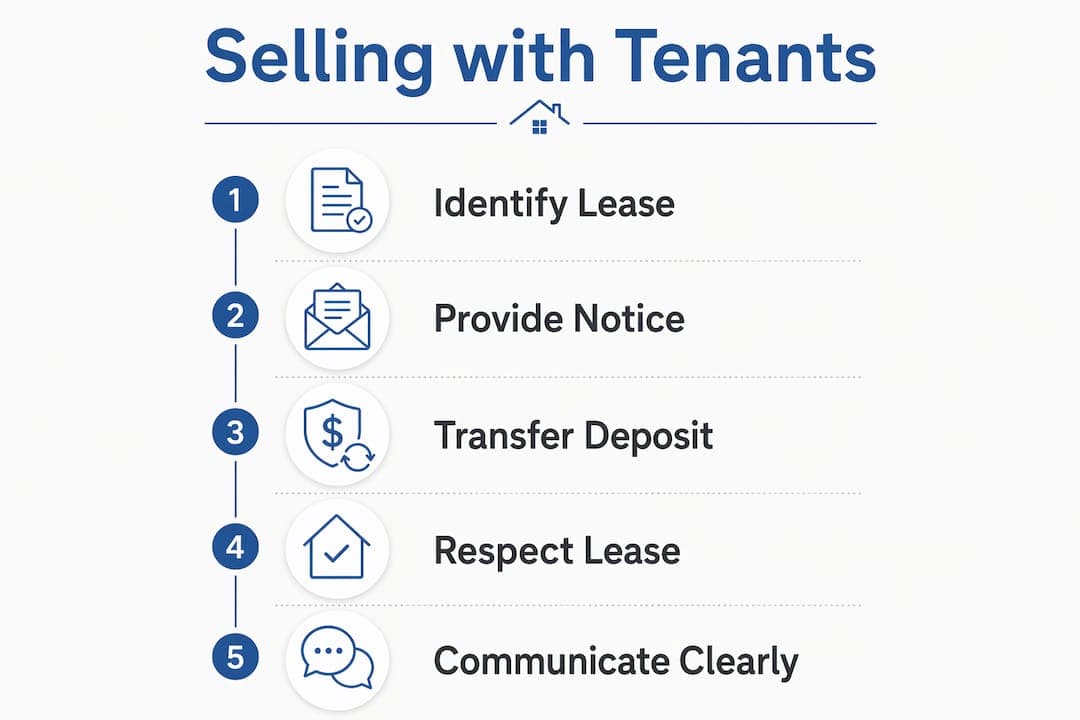
Selling a tenant-occupied Florida property? Housefastcashfl can help
Selling a rental property while tenants are in place adds legal complexity to an already demanding process.
Selling a rental property while tenants are in place adds legal complexity to an already demanding process. Housefastcashfl works with Florida landlords in exactly this situation, making cash offers that account for tenant occupancy and current lease terms.
You do not need to wait for a lease to expire or navigate a complicated listing process. Housefastcashfl provides a no-obligation cash offer within 24 hours and can close in as few as four days. The process is straightforward: submit your property details, receive your offer, and choose your closing date. There are no commissions, no repairs, and no showings to coordinate around your tenant's schedule. If you are ready to exit your rental property on your terms, Housefastcashfl is built for that.
Free Cash Offer
Ready to sell your house for cash?
Tell us about your property. We'll come back within 24 hours with a fair, no-obligation cash offer — no commissions, no inspection drama, no closing-cost surprises.
- Licensed Florida cash buyer
- Close in 7-21 days, on your timeline
- Free, no-obligation cash offer
- We respond within 24 hours
Cash Buyers Network
Sources & References
External sources cited in this article. Verify current figures and rules directly with the issuing source — Florida real-estate data and program rules change quarterly.
From the Blog
Continue Reading
home-selling
Inheritance Property Options: Your 2026 Heir's Guide
Explore inheritance property options in 2026: sell, rent, or move in. Learn how each choice impacts your finances and tax obligations.
Read articlehome-selling
Pitfalls of Listing Inherited Homes: 2026 Guide
Discover the pitfalls of listing inherited homes in 2026. Learn key strategies to navigate probate and safeguard your estate's value.
Read articlehome-selling
Seller Financing Rental Property in Florida: 2026 Guide
Discover how seller financing rental property in Florida can unlock investment opportunities. Learn the benefits, requirements, and legal steps.
Read articlehome-selling
Role of Heirs in Property Sales: 2026 Guide
Discover the role of heirs in property sales. Learn when you can sell inherited property and avoid common probate mistakes.
Read articleFrequently Asked
Common Questions
Does selling a house end a tenant's lease in Florida?
+
No. Selling an occupied property does not terminate a fixed-term lease. The buyer takes the property subject to all existing lease terms.
How much notice must a Florida landlord give before a showing?
+
Florida law requires at least 12 hours notice before entering a rental unit for showings or inspections, and entry must occur between 7:30 a.m. and 8:00 p.m.
Who is responsible for the security deposit after a Florida property sale?
+
The new owner becomes responsible for the security deposit after closing. The seller must transfer the exact deposit amount to the buyer through a written addendum signed by all three parties.
Can a landlord evict a tenant just because they sold the property?
+
No. A property sale is not legal grounds for eviction under the Florida Residential Landlord and Tenant Act. The tenant's lease remains valid and enforceable under the new owner.
What happens if a Florida landlord changes the locks to remove a tenant?
+
Changing locks to force a tenant out is a self-help eviction and is illegal in Florida. Penalties can reach up to three months' rent, plus the tenant may recover attorney's fees.