Selling Inherited Property Before Probate: 2026 Guide
Discover essential steps for selling inherited property before probate. Learn your legal options and avoid costly delays in this comprehensive guide.
What is probate and why does it matter for selling inherited property?
Probate is the court-supervised process that validates a deceased person's will, appoints an executor, and grants legal authority to transfer assets.
Probate is the court-supervised process that validates a deceased person's will, appoints an executor, and grants legal authority to transfer assets. Without it, no one has the right to sign a deed or close a sale on behalf of the estate. The court issues either Letters Testamentary (when a valid will exists) or Letters of Administration (when there is no will) to give the executor that authority.
Executor authority to sell varies significantly by state. Some states allow an independent executor to sell without a court hearing. Others require formal court approval for every sale during probate. That difference can add weeks or months to your timeline, so confirming your state's rules early is not optional.
Probate timelines typically run from a few months to well over a year, depending on estate complexity and court backlogs. During that period, the executor manages the property and pays property taxes from estate funds. Once title transfers to heirs, those carrying costs shift to them, which is one reason speed matters financially.
Some states offer a faster path for smaller estates. California's small estate threshold sits at $184,500 as of 2026, while Arkansas allows heirs to file an Affidavit for Collection of Small Estate if the estate value is under $100,000 and at least 45 days have passed since death. These simplified procedures can bypass full probate entirely for qualifying estates.
Pro Tip: Contact a probate attorney in your state before signing anything. Confirming your executor status and the scope of your authority takes one conversation and prevents months of legal exposure.

Key Takeaways
- Probate authority is required
- You need Letters Testamentary or Letters of Administration
- Exceptions exist for certain
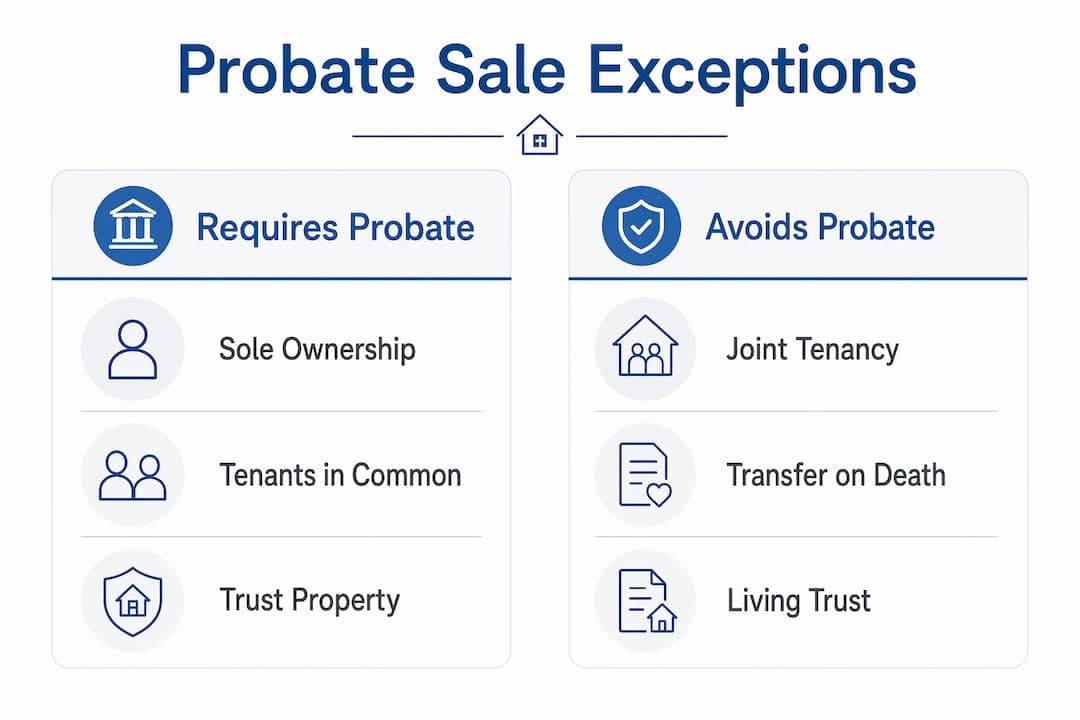
- Joint tenancy, TOD deeds, and living trusts bypass probate
- Marketing can start early
- List with a probate clause to secure a buyer while probate
- Stepped-up basis reduces taxes
- Selling quickly after death minimizes capital gains by
Are there exceptions that allow an inherited property sale before probate?
- — Joint tenancy with right of survivorship: Title passes automatically to the surviving owner at death. No probate is required, and the survivor can sell immediately after recording a death certificate.
- — Transfer-on-death (TOD) deeds: The property transfers directly to the named beneficiary without going through probate. Available in most states, including Florida.
- — Living trusts: Property held in a revocable living trust passes to beneficiaries outside of probate. The successor trustee can sell without court involvement.
- — Tenants in common: Each owner holds a separate share. When one owner dies, their share goes through probate before it can be sold or transferred.
How to prepare for and start marketing an inherited property during probate
- Step 1 — Order a professional appraisal. Get a licensed appraisal dated as close to the date of death as possible This establishes the stepped-up basis for tax purposes and gives you an accurate asking price.
- Step 2 — Assess the property's condition. Walk the property, document needed repairs, and decide whether to sell as-is or make improvements Cash buyers typically purchase as-is, which removes repair delays entirely.
- Step 3 — List the property with a probate clause. Marketing before probate is possible A probate clause in the purchase contract makes the sale contingent on probate being granted. This protects both the executor and the buyer.
- Step 4 — Accept an offer subject to probate. You can negotiate and sign a purchase agreement before Letters Testamentary arrive, as long as the contract clearly states the sale cannot close until probate is complete.
- Step 5 — File the probate application promptly. The fastest way to close sooner is to open probate immediately after death Every week of delay at the filing stage adds a week at the closing stage.
What legal and financial pitfalls should you avoid?
- — Do not sign a deed before Letters Testamentary arrive. A deed signed without authority is void. The title company will catch it, and the deal will collapse.
- — Do not skip court approval if your state requires it. Some jurisdictions require a judge to approve the sale price during probate. Selling below market without approval can trigger legal challenges from other heirs or creditors.
- — Do not ignore estate debts. Creditors have legal claims against estate assets. Sale proceeds must satisfy outstanding debts before heirs receive anything. Distributing proceeds prematurely creates personal liability.
- — Do not skip the date-of-death appraisal. Without a documented fair market value at death, you cannot defend your stepped-up basis to the IRS. That omission can turn a tax-free sale into a taxable one.
How does timing affect taxes when selling inherited property?
- — Get a licensed appraisal at the date of death. A professional appraisal is your primary IRS defense for the stepped-up basis. Without it, the IRS can challenge your reported basis.
- — Avoid renting the property before sale. Renting changes the tax treatment. Depreciation deductions may apply, but rental income becomes taxable and the sale may trigger depreciation recapture.
- — Moving in also changes the picture. Living in the property before sale can qualify you for the primary residence exclusion ($250,000 for single filers, $500,000 for married couples), but only after meeting the two-year occupancy requirement.
- — Consult a CPA before closing. State-level inheritance and estate taxes vary. Florida has no state income tax and no inheritance tax, which makes it favorable for heirs selling Florida property.
Key Takeaways
Selling inherited property before probate is legally restricted to specific ownership structures, and completing a sale without proper authority creates serious personal and financial risk.
Selling inherited property before probate is legally restricted to specific ownership structures, and completing a sale without proper authority creates serious personal and financial risk.

What I've learned from watching heirs rush the process
— Eric
What I've learned from watching heirs rush the process
Working with families navigating inherited property sales, the pattern I see most often is urgency overriding judgment.
Working with families navigating inherited property sales, the pattern I see most often is urgency overriding judgment. An heir wants the property sold fast, understandably so. Grief is exhausting, carrying costs are real, and family disagreements make delays feel unbearable. But the heirs who move fastest without confirming their legal authority are the ones who end up in the worst situations.
The probate clause is one of the most underused tools I know. Buyers who understand it will wait. A well-written clause gives the buyer certainty about the process and gives the executor protection if probate takes longer than expected. The deals that fall apart are almost always the ones where the executor tried to skip the clause to appear more decisive.
My honest advice: get the appraisal done in week one, open probate immediately, and list the property with a probate clause as soon as you have a realistic timeline from the court. You can review your options for inherited sales and understand the tax picture before you commit to any sale structure. The heirs who do this work upfront close faster and net more than the ones who improvise.
The emotional weight of selling a parent's home is real. Give yourself the grace to do it right, not just fast.
Selling your inherited Florida property without the wait
Probate timelines are unpredictable, but your options do not have to be. Housefastcashfl works directly with heirs and executors across Florida to provide fair,…
Probate timelines are unpredictable, but your options do not have to be. Housefastcashfl works directly with heirs and executors across Florida to provide fair, no-obligation cash offers within 24 hours, with closing timelines as short as four days once legal authority is confirmed. There are no repairs, no agent commissions, and no showings to manage while probate runs its course.
If you are unsure whether a cash buyer is the right fit, Housefastcashfl also explains how home buying companies work so you can make a fully informed decision. Reach out today to discuss your specific probate situation and get a clear picture of what a fast, legal sale looks like for your property.
Side-by-side comparison
| Probate required? | Can sell before probate? | |
|---|---|---|
| Joint tenancy (JTWROS) | No | Yes, after recording death certificate |
| Transfer-on-death deed | No | Yes, beneficiary acts directly |
| Living trust | No | Yes, successor trustee acts |
| Tenants in common | Yes | No, probate must complete first |
| Sole ownership | Yes | No, probate must complete first |
Free Cash Offer
Ready to sell your house for cash?
Tell us about your property. We'll come back within 24 hours with a fair, no-obligation cash offer — no commissions, no inspection drama, no closing-cost surprises.
- Licensed Florida cash buyer
- Close in 7-21 days, on your timeline
- Free, no-obligation cash offer
- We respond within 24 hours
Cash Buyers Network
Sources & References
External sources cited in this article. Verify current figures and rules directly with the issuing source — Florida real-estate data and program rules change quarterly.
From the Blog
Continue Reading
home-selling
Inheritance Property Options: Your 2026 Heir's Guide
Explore inheritance property options in 2026: sell, rent, or move in. Learn how each choice impacts your finances and tax obligations.
Read articlehome-selling
Pitfalls of Listing Inherited Homes: 2026 Guide
Discover the pitfalls of listing inherited homes in 2026. Learn key strategies to navigate probate and safeguard your estate's value.
Read articlehome-selling
Seller Financing Rental Property in Florida: 2026 Guide
Discover how seller financing rental property in Florida can unlock investment opportunities. Learn the benefits, requirements, and legal steps.
Read articlehome-selling
Role of Heirs in Property Sales: 2026 Guide
Discover the role of heirs in property sales. Learn when you can sell inherited property and avoid common probate mistakes.
Read articleFrequently Asked
Common Questions
Can you sell inherited property before probate is granted?
+
No. A sale cannot legally close before probate grants authority through Letters Testamentary or Letters of Administration. You can market the property and accept offers subject to probate, but the deed cannot transfer until legal authority is confirmed.
What is a probate clause in a real estate contract?
+
A probate clause makes the sale contingent on the executor receiving court-granted authority. It protects both the buyer and the executor if probate takes longer than expected or is contested.
Which ownership types avoid probate entirely?
+
Joint tenancy with right of survivorship, transfer-on-death deeds, and property held in a living trust all bypass probate. The surviving owner or named beneficiary can sell without court involvement.
How does the stepped-up basis reduce capital gains tax?
+
The IRS resets your cost basis to the property's fair market value on the date of death. Selling quickly after inheritance typically means little to no capital gains, since the sale price is close to the new basis.
What happens if you sell inherited property without legal authority?
+
Selling without executor authority can result in the court invalidating the sale, breach of contract lawsuits, and personal financial liability for the executor. Always confirm your legal standing before signing any sales agreement.