
Traditional Home Sale Process: a Seller's Complete Guide
Discover what is traditional home sale process in this comprehensive guide. Learn each stage to maximize your sale and avoid pitfalls.
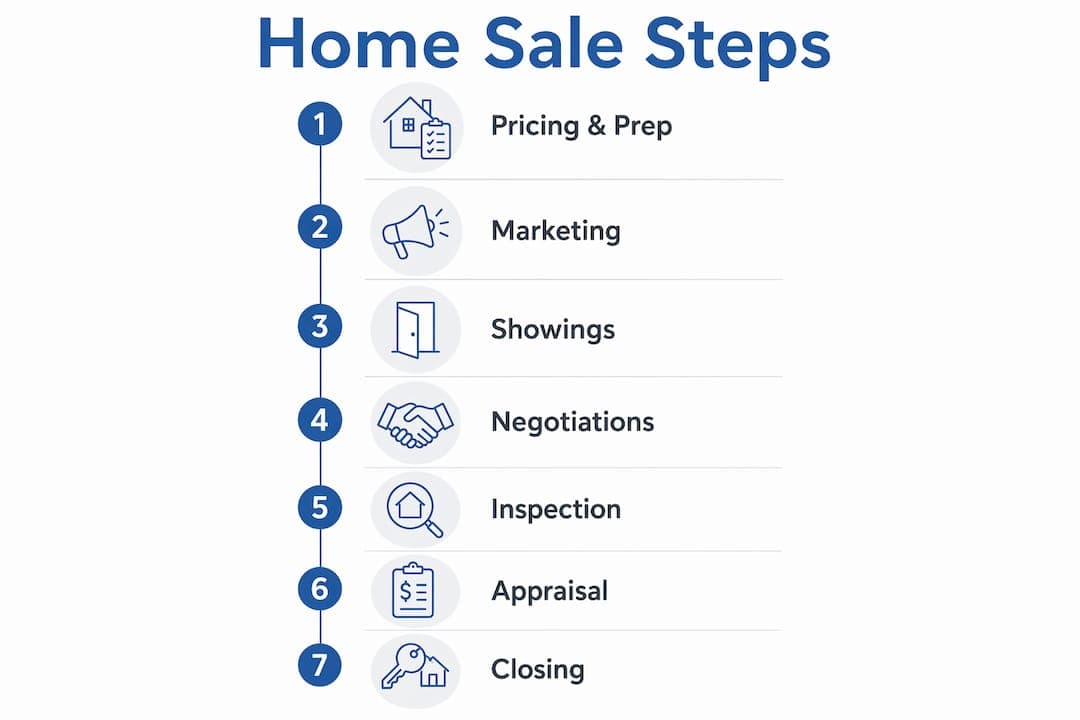
What are the key stages in the traditional home sale process?
- Step 1 — Preparation and pricing. You set the list price using a Comparative Market Analysis (CMA) and prepare the home physically This stage defines your financial ceiling for the entire transaction.
- Step 2 — Marketing and listing. Your agent submits the property to the MLS and syndicates it to platforms like Zillow and Realtor.com Professional photography and a compelling listing description go live here.
- Showings and open houses. Buyers and their agents tour the property — Your job is to keep the home accessible and presentable on short notice.
- Step 4 — Offer review and negotiation. You receive written offers and evaluate price, contingencies, and financing type Counteroffers move back and forth until both parties agree.
- Contract execution. Both parties sign the purchase and sale agreement — The buyer typically deposits earnest money within one to three business days.
Key Takeaways
- Early pricing is critical
- Homes priced correctly from day one attract more offers and
- Showings demand constant
- Sellers must keep the home clean and accessible throughout
- Offers involve more than price
- Contingencies, financing type, and earnest money all affect
- Closing is not complete at
- The deed must be recorded before the sale is legally final
How does pricing and preparation affect your final sale price?
- Order a pre-listing inspection to identify issues before buyers do
- Deep clean and declutter every room, including closets and the garage
- Complete minor repairs — leaky faucets, chipped paint, broken fixtures
- Hire a professional photographer. Listing photos are the first showing.
- Review your agent's CMA and compare at least three recent comparable sales
What happens during marketing, showings, and offer negotiation?
- — Financing type. Cash offers close faster and carry no appraisal risk. Buyers with pre-approval strength close more reliably than those with conditional approvals.
- — Earnest money deposit. A larger deposit signals buyer commitment and reduces the risk of a last-minute walkaway.
- — Inspection contingency. Buyers who waive inspection take on more risk, which often translates to a cleaner deal for you.
- — Closing timeline. A buyer who matches your preferred closing date reduces the chance of carrying two mortgages or needing temporary housing.
- — Appraisal gap coverage. In competitive markets, buyers sometimes agree to cover any gap between the appraised value and the purchase price.
What are the due diligence and closing steps in a traditional sale?
The period between contract signing and closing is where deals most often fall apart. [Low appraisals, inspection issues, and financing…
The period between contract signing and closing is where deals most often fall apart. Low appraisals, inspection issues, and financing problems are the leading causes of renegotiations and cancellations after a contract is signed.
The home inspection typically happens within 7 to 10 days of contract signing. Buyers submit a repair request based on the inspector's findings. You have three options: agree to repairs, offer a credit at closing, or decline and risk the buyer walking. Inspection negotiations require prompt responses. Delays signal weakness and give buyers time to reconsider the deal entirely.
The appraisal follows shortly after. The buyer's lender orders it to confirm the home's value supports the loan amount. If the appraisal comes in below the purchase price, you either renegotiate the price, the buyer covers the gap, or the deal collapses.
True closing happens at deed recording, not at document signing. Lender delays are the leading cause of closing failures, and recording can happen days after both parties have signed. A transaction coordinator manages the timeline between your agent, the buyer's lender, the title company, and the escrow officer to keep everything on track.
Standard financed closings take 30 to 45 days from offer acceptance to recording. All-cash closings typically complete in 14 to 21 days. That difference matters significantly if you are under time pressure.
Pro Tip: Stay in direct contact with your agent and transaction coordinator during the final two weeks. Proactive sellers who flag potential delays early give lenders and title companies time to solve problems before they become cancellations.

Key Takeaways
The traditional home sale process succeeds or fails based on decisions made in the first two weeks, from pricing and preparation through to how you evaluate offers.
The traditional home sale process succeeds or fails based on decisions made in the first two weeks, from pricing and preparation through to how you evaluate offers.
What I've learned about the traditional sale process after years in real estate
— Eric
What I've learned about the traditional sale process after years in real estate
Most sellers walk into the traditional home sale process expecting a linear, predictable experience.
Most sellers walk into the traditional home sale process expecting a linear, predictable experience. What they get is a series of high-stakes decisions compressed into a short window, with little margin for error.
The stage that surprises sellers most is not closing. It is the showing period. Keeping your home spotless for three to six weeks while strangers walk through it on short notice is genuinely disruptive. Sellers who underestimate this end up turning down showings, which reduces offer volume and weakens their negotiating position.
The other thing most guides skip is the emotional weight of inspection negotiations. When a buyer submits a repair request, sellers often take it personally. The smart move is to treat it as a financial calculation, not a judgment of your home. Offer a credit rather than completing repairs yourself. It is faster, cleaner, and keeps the deal alive.
Sellers who manage the full process without an experienced agent or attorney take on significant legal and financial risk, especially during negotiations and compliance steps. The commission feels expensive until you see what a mishandled contract costs.
My honest advice: hire an experienced listing agent, get a pre-listing inspection, and price your home based on data rather than emotion. The sellers who do those three things consistently outperform those who do not.

When the traditional process is not the right fit for your situation
The traditional home sale process delivers strong results for sellers with time, a market-ready property, and the bandwidth to manage showings and negotiations.
The traditional home sale process delivers strong results for sellers with time, a market-ready property, and the bandwidth to manage showings and negotiations. Not every seller has all three.
If you are facing foreclosure, dealing with an inherited property, or simply need to close faster than 30 to 45 days allows, a cash buyer can be a practical alternative. Housefastcashfl works with Florida homeowners in exactly these situations, offering no-obligation cash offers within 24 hours and closing timelines as short as four days, with no repairs, no showings, and no commissions required.
Before you decide, it helps to understand how cash buyers compare to traditional agents in terms of speed, net proceeds, and seller obligations. You can also review whether home buying companies are legitimate and what to look for when evaluating one. Housefastcashfl is verified through Google and the BBB, so you can check its standing before making any decision.
Side-by-side comparison
| Responsible party | Typical deadline | |
|---|---|---|
| Home inspection | Buyer (with seller response) | 7–10 days after contract |
| Appraisal ordered | Buyer's lender | Within 10 days of contract |
| Financing approval / clear to close | Buyer's lender | 21–30 days after contract |
| Final walkthrough | Buyer | 24–48 hours before closing |
| Document signing | Both parties | Closing day |
| Deed recording | Title company / escrow | 1–3 days after signing |
Free Cash Offer
Ready to sell your house for cash?
Tell us about your property. We'll come back within 24 hours with a fair, no-obligation cash offer — no commissions, no inspection drama, no closing-cost surprises.
- Licensed Florida cash buyer
- Close in 7-21 days, on your timeline
- Free, no-obligation cash offer
- We respond within 24 hours
Cash Buyers Network
Sources & References
External sources cited in this article. Verify current figures and rules directly with the issuing source — Florida real-estate data and program rules change quarterly.
From the Blog
Continue Reading
home-selling
Inheritance Property Options: Your 2026 Heir's Guide
Explore inheritance property options in 2026: sell, rent, or move in. Learn how each choice impacts your finances and tax obligations.
Read articlehome-selling
Pitfalls of Listing Inherited Homes: 2026 Guide
Discover the pitfalls of listing inherited homes in 2026. Learn key strategies to navigate probate and safeguard your estate's value.
Read articlehome-selling
Seller Financing Rental Property in Florida: 2026 Guide
Discover how seller financing rental property in Florida can unlock investment opportunities. Learn the benefits, requirements, and legal steps.
Read articlehome-selling
Role of Heirs in Property Sales: 2026 Guide
Discover the role of heirs in property sales. Learn when you can sell inherited property and avoid common probate mistakes.
Read articleFrequently Asked
Common Questions
What is the traditional home sale process?
+
The traditional home sale process is the structured sequence of steps a homeowner follows to sell a property on the open market, including preparation, listing on the MLS, showings, offer negotiation, due diligence, and closing.
How long does a traditional home sale take?
+
Standard financed closings take 30 to 45 days from offer acceptance to deed recording. The full process from initial preparation to closing typically spans 60 to 90 days depending on market conditions.
What is "clear to close" in a home sale?
+
"Clear to close" is the status a buyer's lender issues when the loan is fully approved and the deal is ready to proceed to closing. It is a critical milestone, but the sale is not legally complete until the deed is recorded.
Can I sell my home without a real estate agent?
+
Yes, but FSBO sellers take on full responsibility for legal documents, regulatory compliance, and negotiations. Most states recommend real estate attorney involvement to manage the legal complexity.
What is the biggest risk during the closing phase?
+
Lender delays are the leading cause of closing failures. Inspection findings and low appraisals also trigger renegotiations that can collapse a deal after the contract is signed.