Why Avoid Home Repairs Before Selling Your House
Discover why avoid home repairs before selling can save you money. Learn how to maximize your profit without unnecessary renovations.
Why avoid home repairs before selling?
- — Cosmetic upgrades like new countertops, cabinet refacing, or flooring replacements rarely return full cost
- — Luxury renovations such as high-end appliances or spa bathrooms appeal to a narrow buyer segment
- — Partial room upgrades that leave mismatched finishes create a patchwork look buyers notice immediately
- — Grandfathered code issues that existed before current building codes took effect do not legally require correction in most Florida counties
- Landscaping overhauls beyond basic cleanup and mowing
Key Takeaways
- Most repairs lose money
- Major kitchen remodels recover under 50% of cost, making
- Safety repairs are non-negotia
- Fix leaks, electrical hazards, and HVAC issues to protect
- DIY work carries hidden costs
- About 45% of DIY projects go unfinished, and amateur work
- Holding costs add up fast
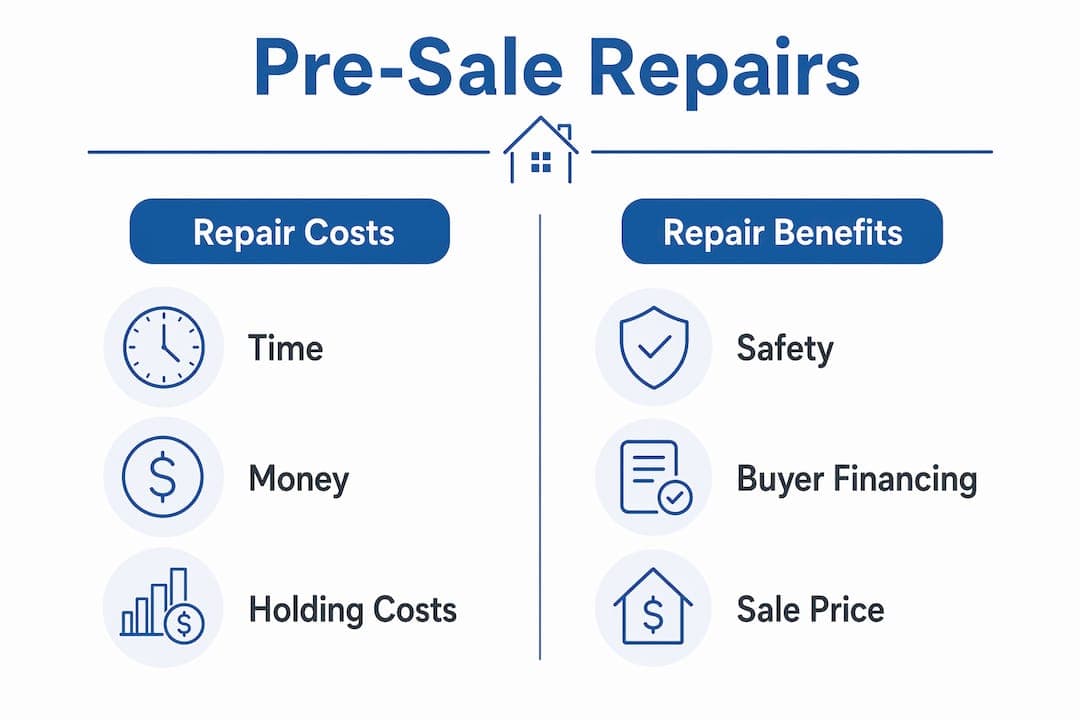
- Monthly carrying costs of $2,000 or more can erase the
What repairs actually matter before listing?
- Step 1 — Active roof leaks — water intrusion causes mold, structural rot, and immediate red flags on inspection reports
- Step 2 — Electrical hazards — exposed wiring, outdated panels, and non-GFCI outlets near water sources are safety code violations
- Step 3 — Plumbing leaks — visible water damage under sinks or around toilets signals deferred maintenance to every buyer
- Step 4 — HVAC functionality — a non-working air conditioner in Florida is a near-automatic deal killer
- Step 5 — Foundation cracks — large horizontal cracks in block foundations require professional evaluation before listing
DIY repairs vs. hiring professionals: which costs more?
"The hidden cost of DIY is not just the materials or the time. It is the buyer distrust that comes from visible amateur work.
"The hidden cost of DIY is not just the materials or the time. It is the buyer distrust that comes from visible amateur work. A buyer who sees a crooked tile or an uneven drywall patch starts wondering what else was done wrong."
DIY repairs vs. hiring professionals: which costs more?
Most sellers underestimate the true cost of doing repairs themselves. [DIY bathroom…
Most sellers underestimate the true cost of doing repairs themselves. DIY bathroom remodels average 200–300 hours of homeowner time. That is five to seven weeks of full-time work for one room. And about 45% of DIY projects are never completed, leaving a half-finished space that actively hurts your sale.
The ROI gap between professional and DIY work is significant. Professionally installed kitchen and bathroom remodels yield 70–85% ROI, while DIY versions return only 40–60%. That gap exists because licensed contractors secure trade discounts on materials, provide labor warranties, and deliver finished work that passes inspection without surprises.
Improper DIY electrical and structural work can void your homeowner's insurance and trigger price concessions during buyer inspections that exceed what a licensed contractor would have charged. Structural projects involving load-bearing walls, foundations, or major electrical rework require licensed experts to avoid costly future liabilities.

The real financial cost of pre-sale repairs
- — Your personal time spent managing contractors or doing repairs has real dollar value
- — Market timing risk increases with every week your home sits unlisted. Florida markets shift quickly
- — Stress and decision fatigue affect your negotiating clarity when offers finally arrive
- — Carrying debt on a property you are trying to exit compounds your financial exposure
Should you sell as-is or make selective repairs?
- Step 1 — Your market conditions — in a seller's market with low inventory, buyers accept more imperfections In a buyer's market, condition matters more
- Step 2 — Your buyer type — retail buyers using conventional financing have stricter condition expectations than cash investors
- Step 3 — Your timeline — if you need to close in 30 days or less, repairs are not realistic
- Step 4 — Your home's condition — a property with only cosmetic issues is a strong as-is candidate A property with structural problems needs accurate pricing that reflects those deficits
Key Takeaways
Skipping unnecessary pre-sale repairs protects your net profit, reduces holding costs, and keeps your timeline on track.
Skipping unnecessary pre-sale repairs protects your net profit, reduces holding costs, and keeps your timeline on track.
What I've learned about repair decisions after years in Florida real estate
— Eric
What I've learned about repair decisions after years in Florida real estate
I have watched sellers spend $25,000 on a kitchen remodel, list their home three months later than planned, and net less than their neighbor who sold as-is the week they decided to move.
I have watched sellers spend $25,000 on a kitchen remodel, list their home three months later than planned, and net less than their neighbor who sold as-is the week they decided to move. It happens more than you would think.
The emotional pull to "fix everything before we sell" is real. Your home represents years of memories and personal investment. Handing it over with visible wear feels wrong. But that instinct costs sellers money every single time it overrides the math.
The sellers who come out ahead are the ones who run the numbers first. They ask: what does this repair actually cost, including my time and holding costs? What does it realistically add to my sale price? If the answer is "less than I'm spending," they skip it.
One point most articles avoid making directly: the repair decisions that hurt sellers most are not the big obvious ones. Nobody spends $50,000 on a full addition without thinking hard about it. The damage comes from dozens of smaller decisions, each one seeming reasonable on its own, that collectively delay the sale by months and drain the profit margin.
Focus on safety. Price accurately for condition. Sell quickly. That formula works in Florida's market better than any renovation plan I have ever seen.
Sell your Florida home fast without the repair headache
If you are weighing whether the cost of repairs before selling is worth it, Housefastcashfl offers a direct alternative.
If you are weighing whether the cost of repairs before selling is worth it, Housefastcashfl offers a direct alternative. You can get a cash offer within 24 hours on your Florida property, regardless of its condition. No repairs, no showings, no commissions, and no months of holding costs while a renovation drags on.
Housefastcashfl works with homeowners across Florida who need to sell quickly, whether the property has deferred maintenance, structural issues, or simply needs more work than you have time or budget to handle. If you want to understand whether a cash buyer is the right fit, the legitimacy guide for home buying companies walks you through exactly what to look for. The process takes three steps: submit your property details, receive a no-obligation offer, and close on your timeline.
Side-by-side comparison
| Professional ROI | DIY ROI | |
|---|---|---|
| Kitchen remodel | 70–85% | 40–60% |
| Bathroom remodel | 70–80% | 40–55% |
| Electrical upgrades | Passes inspection | Risk of voided insurance |
| Structural work | Code compliant | Potential sale liability |
Free Cash Offer
Ready to sell your house for cash?
Tell us about your property. We'll come back within 24 hours with a fair, no-obligation cash offer — no commissions, no inspection drama, no closing-cost surprises.
- Licensed Florida cash buyer
- Close in 7-21 days, on your timeline
- Free, no-obligation cash offer
- We respond within 24 hours
Cash Buyers Network
Sources & References
External sources cited in this article. Verify current figures and rules directly with the issuing source — Florida real-estate data and program rules change quarterly.
From the Blog
Continue Reading
home-selling
Inheritance Property Options: Your 2026 Heir's Guide
Explore inheritance property options in 2026: sell, rent, or move in. Learn how each choice impacts your finances and tax obligations.
Read articlehome-selling
Pitfalls of Listing Inherited Homes: 2026 Guide
Discover the pitfalls of listing inherited homes in 2026. Learn key strategies to navigate probate and safeguard your estate's value.
Read articlehome-selling
Seller Financing Rental Property in Florida: 2026 Guide
Discover how seller financing rental property in Florida can unlock investment opportunities. Learn the benefits, requirements, and legal steps.
Read articlehome-selling
Role of Heirs in Property Sales: 2026 Guide
Discover the role of heirs in property sales. Learn when you can sell inherited property and avoid common probate mistakes.
Read articleFrequently Asked
Common Questions
What repairs should you never make before selling?
+
Avoid major kitchen remodels, luxury bathroom upgrades, and partial room renovations. These repairs recover under 50% of their cost and rarely justify the time or expense before a sale.
Is selling a house as-is a good idea?
+
Yes, in many situations. As-is sales attract cash investors and fixer-upper buyers, eliminate repair delays, and avoid holding costs that erode your net profit.
How much do holding costs affect your sale profit?
+
Significantly. Monthly holding costs including mortgage, taxes, insurance, and utilities typically run $2,000 or more. A three-month repair project can cost $6,000 or more in carrying expenses before you close.
When does DIY repair work hurt a home sale?
+
DIY electrical, structural, and plumbing work can void insurance coverage and trigger buyer price concessions during inspection. Improper DIY work often costs sellers more in concessions than a licensed contractor would have charged.
What low-cost improvements actually help before selling?
+
Staging, deep cleaning, decluttering, and fresh paint deliver the strongest ROI for sellers. These improvements can increase offers by 3–7% and reduce time on market without the financial risk of a full renovation.